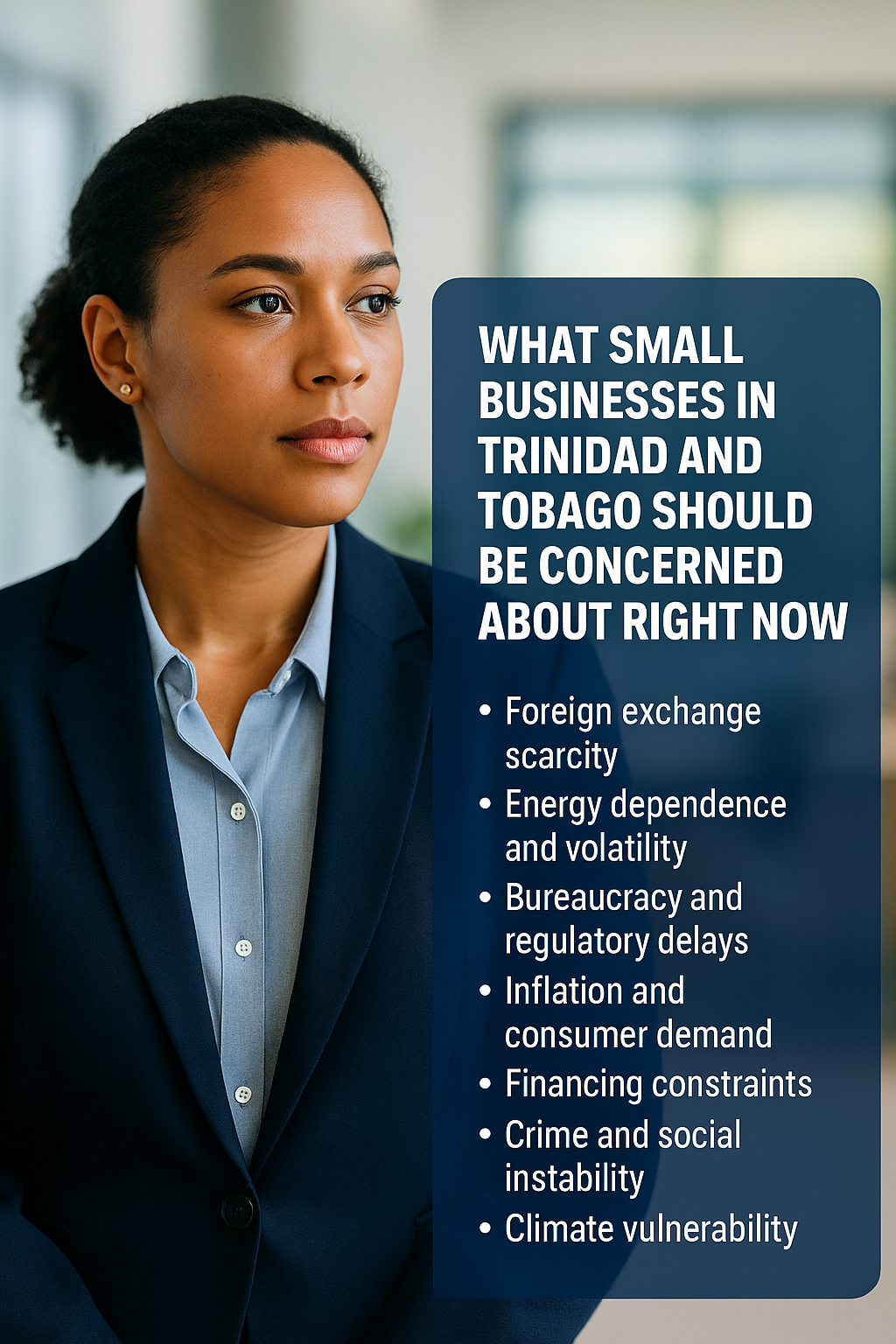
What Small Businesses in Trinidad and Tobago Should Be Concerned About Right Now

Running a small business in Trinidad and Tobago has never been easy, but 2025 has brought a unique mix of economic, political, and social shifts that are making the environment even more challenging. While the entrepreneurial spirit remains strong across the country, small businesses need to approach the next 12 to 18 months with sharper awareness, stronger risk management, and more adaptive thinking. As an economist watching regional trends closely, here’s what I believe every small business owner in Trinidad and Tobago should be paying attention to right now.
Foreign Exchange Scarcity and Cost Pressures
One of the most immediate and frustrating realities for small businesses is the ongoing shortage of foreign exchange. Accessing U.S. dollars and other foreign currencies is increasingly difficult, with many businesses waiting weeks or months for allocations. Banks actually have businesses on a waiting list, and not just for U.S. dollars, but even Euros as well. This delay forces some to resort to the parallel market, where exchange rates are significantly higher, eroding already thin profit margins.
For businesses that rely on imported goods, raw materials, or equipment, this poses a serious risk. Cost planning becomes unpredictable, pricing strategies are harder to maintain, and in some cases, operations can be disrupted entirely. Companies should be exploring alternative sourcing options, negotiating more flexible supplier terms, or holding higher inventory levels if cash flow allows.
Energy Dependence and Macroeconomic Volatility
Trinidad and Tobago’s economy remains heavily tied to the energy sector. Oil, gas, and petrochemicals still account for a large share of GDP and export earnings. While the sector continues to generate revenue, it also exposes the country to external shocks. Fluctuations in global energy prices, production disruptions, or changes in global demand can all ripple into slower economic growth, tighter public finances, and weaker domestic demand.
For small businesses, this means heightened uncertainty. Government spending, consumer spending power, and business confidence are all linked to the fortunes of the energy sector. The pace of economic diversification remains slow, so businesses should anticipate cyclical ups and downs and plan accordingly.
Bureaucracy, Regulation, and Business Friction
Despite efforts to improve the business environment, regulatory delays, bureaucratic red tape, and inconsistent enforcement continue to frustrate small business owners. Licensing, permits, and tax compliance processes remain slow and often unpredictable. Legal disputes can take years to resolve, and government procurement processes are still viewed as opaque and overly complex.
This environment raises costs, lengthens lead times, and makes growth planning more difficult. Small businesses should build realistic timeframes into their operations, ensure they are fully compliant, and consider collaborating with business associations to advocate for regulatory reform.
Inflation, Consumer Spending, and Cost of Living Pressures
Inflation remains a real concern, especially when combined with foreign exchange challenges. Even with relatively moderate headline inflation, the cost of imported goods continues to climb. At the same time, rising food prices and cost-of-living pressures are eating into household budgets.
For many consumers, non-essential spending is the first to go. Businesses in retail, services, and lifestyle sectors may feel the pinch as demand softens. To stay resilient, small businesses should focus on value-driven offerings, flexible pricing strategies, and products or services that remain relevant even in tighter economic conditions.
Financing Constraints and Higher Credit Risk
Access to finance has always been a challenge for small businesses, and the current environment may tighten lending conditions further. Banks are likely to remain cautious, especially with weaker consumer demand and slower economic growth. For entrepreneurs without strong collateral or a solid credit history, accessing loans for growth or even working capital can be difficult.
Now is the time to strengthen financial records, improve cash flow management, and explore alternative financing models such as supplier credit, co-operative lending, or investment partnerships.
Policy Shifts and Fiscal Pressures
The recent change in government introduces another layer of uncertainty. Policy priorities, tax measures, and regulatory approaches could all shift as the new administration seeks to address fiscal pressures and social demands. With public debt rising and revenue challenges persisting, there is a real possibility of new taxes, reduced subsidies, or increased enforcement.
Small businesses must stay alert to policy announcements, budget statements, and legislative changes. Being proactive rather than reactive can help you adjust your business model ahead of regulatory changes rather than scrambling after the fact.
Crime, Security, and Social Instability
Rising crime rates continue to affect both the cost and safety of doing business. Security systems, insurance premiums, and operational risks all add to the expense of running a small enterprise. Beyond that, protests linked to economic frustration or service delivery can also disrupt transportation, supply chains, and customer traffic.
Factoring security into your cost structure and continuity planning is no longer optional. It’s essential!
Climate Vulnerability and Infrastructure Gaps
Finally, climate-related risks and infrastructure limitations should not be ignored. Severe weather events, flooding, and drainage issues can disrupt operations or damage assets, particularly for businesses in manufacturing, logistics, or retail. Weak infrastructure, such as inadequate roads or unreliable utilities, also adds hidden costs.
Businesses should assess their physical vulnerabilities, insure critical assets, and develop contingency plans for disruptions.
What Small Businesses Can Do Now
While these challenges are significant, they’re not insurmountable. Small businesses that adapt early and plan strategically can still thrive. Here are a few practical steps:
- Conduct stress tests on your cash flow to see how you’d manage under cost increases, supply delays, or reduced sales.
- Diversify your revenue streams to avoid relying too heavily on one market or product.
- Build local supplier relationships and explore nearshore sourcing to reduce foreign exchange exposure.
- Manage debt conservatively and avoid overleveraging in uncertain times.
- Monitor government policy closely and adjust your business plans quickly when changes occur.
- Strengthen collaboration with industry associations to amplify your voice on policy issues.
The road ahead for small businesses in Trinidad and Tobago is not without obstacles, but it’s also full of opportunity for those who are agile, informed, and prepared. The current state of affairs demands more than just optimism; it calls for strategic action, sound financial management, and a deep understanding of the forces shaping the economy. With the right approach, small businesses can continue to be the engine of growth and innovation that the country needs.